
Back-to-School Sports Start With Better Balance: How ProBalance 360 Helps Reduce Injury Risk
Back-to-School Sports Start With Better Balance: How ProBalance 360 Helps Reduce Injury Risk
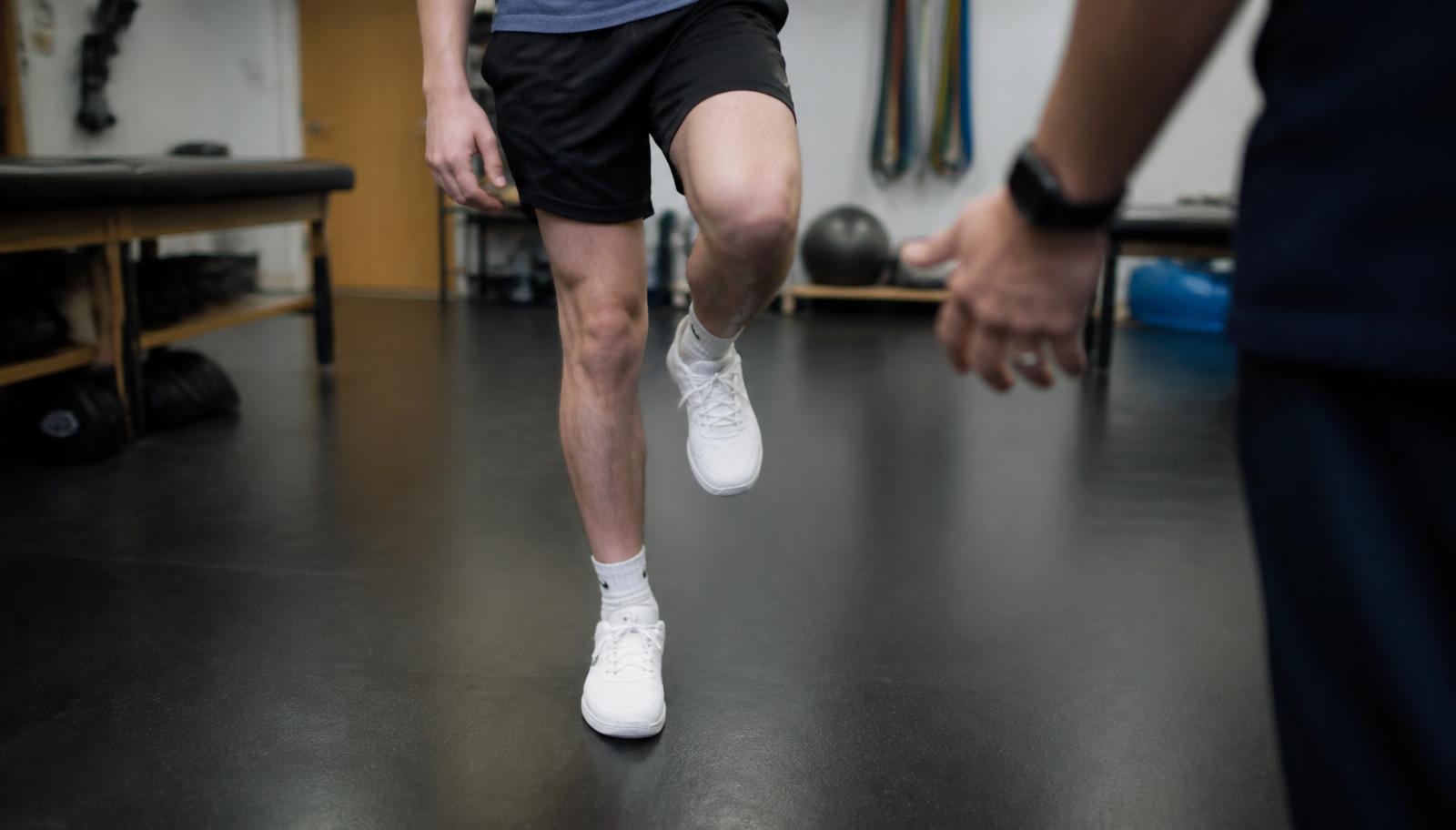
Fall sports season arrives fast. One week your athlete is off for the summer, the next they're sprinting, cutting, and landing at full speed on a turf field. That sudden jump in demand is exactly when ankles roll, knees give out, and hamstrings pull — and one of the most overlooked reasons is simple: balance. ProBalance 360 lets us measure how well an athlete actually controls their body, then train the weak links before they turn into a sideline injury.
Why Balance Is a Sports Injury Issue
Balance isn't just standing still on one foot. It's your nervous system taking information from your inner ear, eyes, feet, and joints, and correcting your position hundreds of times a minute. When that system is slow or asymmetrical, an athlete's ankle doesn't catch itself in time on an awkward landing.
Poor postural control is one of the best-documented predictors of ankle sprains, and guidance from the National Institute of Arthritis and Musculoskeletal and Skin Diseases notes that ankle sprains are among the most common musculoskeletal injuries and that weakened support around the joint raises the odds of another one. That matters because a first sprain makes the next one more likely — the ligament heals, but the position sense inside it often does not fully recover on its own.
Ankle Instability: The Injury That Keeps Coming Back
Chronic ankle instability is that familiar "my ankle just gives out" feeling months after the swelling is long gone. It is a neurological problem as much as a ligament problem. The MedlinePlus guide to sprains and strains notes that proper rehabilitation — not just rest — is what restores strength and stability after these injuries.
We see the same pattern in our Little Rock clinic across sports injuries of every kind: the athlete gets cleared, goes back to play, and re-injures within a season because the balance deficit was never retrained.
What ProBalance 360 Measures
ProBalance 360 uses a computerized balance platform to quantify how your body stabilizes itself. Instead of guessing, we get numbers:
- Sway and center-of-pressure control with eyes open and eyes closed
- Left-versus-right weight distribution and asymmetry
- How much you rely on vision versus joint position sense
- Reaction and correction speed when your balance is challenged
- Objective before-and-after scores to track progress
Details on the testing and training protocol are on our ProBalance 360 service page.
From Testing to Training
Once we know where the deficit is, the platform becomes a training tool. Interactive, game-style exercises push the athlete to shift weight, hold positions, and react under load — progressively harder as scores improve. Because the system gives real-time visual feedback, athletes learn the correction rather than just being told about it.
The CDC's physical activity guidelines for children and adolescents emphasize balance and strength work alongside aerobic activity — exactly the combination that keeps young athletes durable across a season.
How We Combine Balance Work With Chiropractic Care
Balance depends on joints that move well. A restricted ankle, a stiff mid-back, or a misaligned pelvis feeds your nervous system bad information, and no amount of balance training fully overcomes that. So we pair ProBalance 360 with gentle adjustments and mobility work through our chiropractic care program, plus soft-tissue and rehab therapy when the athlete needs it.
Simple Preseason Habits That Protect Athletes
- Ramp up gradually. Sudden spikes in training volume drive most early-season injuries.
- Warm up dynamically. Five to ten minutes of movement beats static stretching before play.
- Train single-leg strength. Nearly every sport injury happens on one leg.
- Replace worn shoes. Broken-down soles change how the foot loads.
- Rehab old sprains properly. Pain-free is not the same as stable.
Get a Baseline Before the Season Starts
A preseason balance screen takes only a few minutes and gives you something most athletes never have: an objective baseline. If an injury does happen, we know exactly what "back to normal" looks like.
Ready to reduce your athlete's injury risk this season? Contact Faulkenberry Chiropractic in Little Rock to schedule a ProBalance 360 assessment.
This article is for general education and is not medical advice. Individual results vary; please consult a qualified provider about your specific condition.
Frequently Asked Questions
How can ProBalance 360 help athletes?
ProBalance 360 measures balance and stability, helping identify weaknesses that could raise injury risk.
Who should get a balance assessment for sports?
Athletes of any age, especially those returning from injury or playing high-movement sports, may benefit.
How long does the test take?
A ProBalance 360 test usually takes only a few minutes.
Take the first step toward natural, lasting pain relief.
Talk with Dr. Faulkenberry about your symptoms and see if our non-surgical, root-cause approach is right for you.