
What Is ProBalance 360? A New Way to Measure and Improve Your Balance
What Is ProBalance 360? A New Way to Measure and Improve Your Balance
Balance is easy to take for granted until it starts to slip. Most people cannot tell you how steady they are — they only notice the moments they wobble. ProBalance 360 balance testing replaces that guesswork with real measurements, so we can see exactly where your stability breaks down and track whether it is improving. At Faulkenberry Chiropractic in Little Rock, it has become one of the most useful tools we have for protecting mobility.
What ProBalance 360 Actually Is
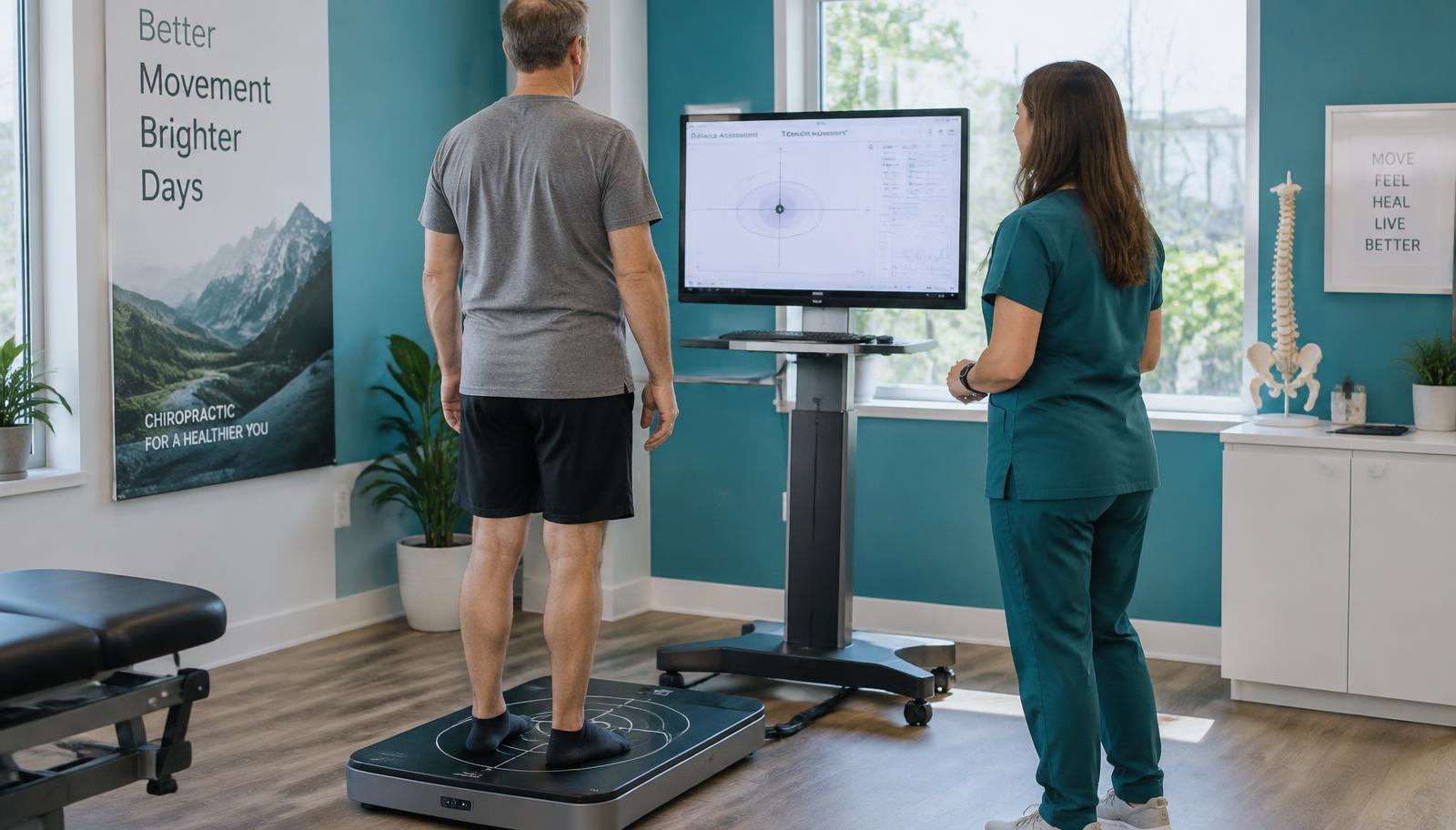
ProBalance 360 is a computerized balance assessment and training system. You stand on a sensor platform while the system records how your body controls its center of gravity. Instead of a pass-or-fail impression, you get objective numbers — and those numbers become the baseline we measure future progress against.
What the Test Measures
- How much you sway with your eyes open compared with your eyes closed
- How evenly you distribute weight between your left and right leg
- How far you can shift your weight before losing control
- How quickly you recover when your stability is challenged
- Which sensory system — vision, inner ear, or body position sense — you rely on most
That last point matters. Staying upright depends on several systems working together, and the National Institute on Deafness and Other Communication Disorders explains how a problem in any one of them can create dizziness or unsteadiness. Testing helps show which link in the chain is weak.
Why Objective Testing Beats Self-Assessment
MedlinePlus lists a wide range of causes behind balance problems — nerve changes, inner-ear conditions, joint issues, medications, and more. Because the causes differ, the plan should too. Measuring first means care is aimed at what is actually happening rather than a general assumption about unsteadiness.
Who Benefits From Balance Testing
Adults over 60 who want to stay independent are the most common candidates, and the Centers for Disease Control and Prevention notes that many fall risk factors can be identified and addressed before an injury happens. But testing also helps athletes returning from an ankle or knee injury, people with numbness or tingling in the feet, anyone recovering from a concussion or a fall, and patients whose joint pain has quietly changed how they walk.
From Measurement to Improvement
Testing is only the start. Once we see where control is lacking, ProBalance 360 is also used for guided training that progressively challenges stability in a controlled way. When something else is driving the unsteadiness, we treat that too — nerve symptoms in the feet may respond to nerve plate neuropathy therapy, and joint discomfort such as knee pain gets addressed alongside the balance work. Repeat testing then shows whether the plan is working.
What a First Visit Looks Like
Wear comfortable clothes and flat shoes. The assessment itself is short, non-invasive, and requires no special preparation — you simply stand while the platform records. Afterward we walk you through your results in plain language, explain what they mean for your daily movement, and outline what improvement would look like.
Curious Where Your Balance Stands?
If you have noticed yourself reaching for walls, avoiding uneven ground, or feeling unsteady when you turn your head, measuring is the fastest way to get answers. Contact Faulkenberry Chiropractic in Little Rock to ask about ProBalance 360 balance testing.
This article is for general education and is not medical advice. Individual results vary. Please consult a qualified provider about your specific condition.
Take the first step toward natural, lasting pain relief.
Talk with Dr. Faulkenberry about your symptoms and see if our non-surgical, root-cause approach is right for you.