
Mechanical Motion Therapy (ProMotion MMT)
A doctor-certified technique delivered with the ProMotion instrument — pairing precise, computer-controlled treatment with your own guided movement, so tissues are treated the way they're actually used: in motion.
What Is Mechanical Motion Therapy?
Most soft-tissue treatments happen while you lie still. Mechanical Motion Therapy is different. MMT is a branded, doctor-certified technique from the ProAdjuster family of technologies, delivered with the ProMotion instrument — combining instrument-applied treatment with simultaneous, patient-assisted movements.
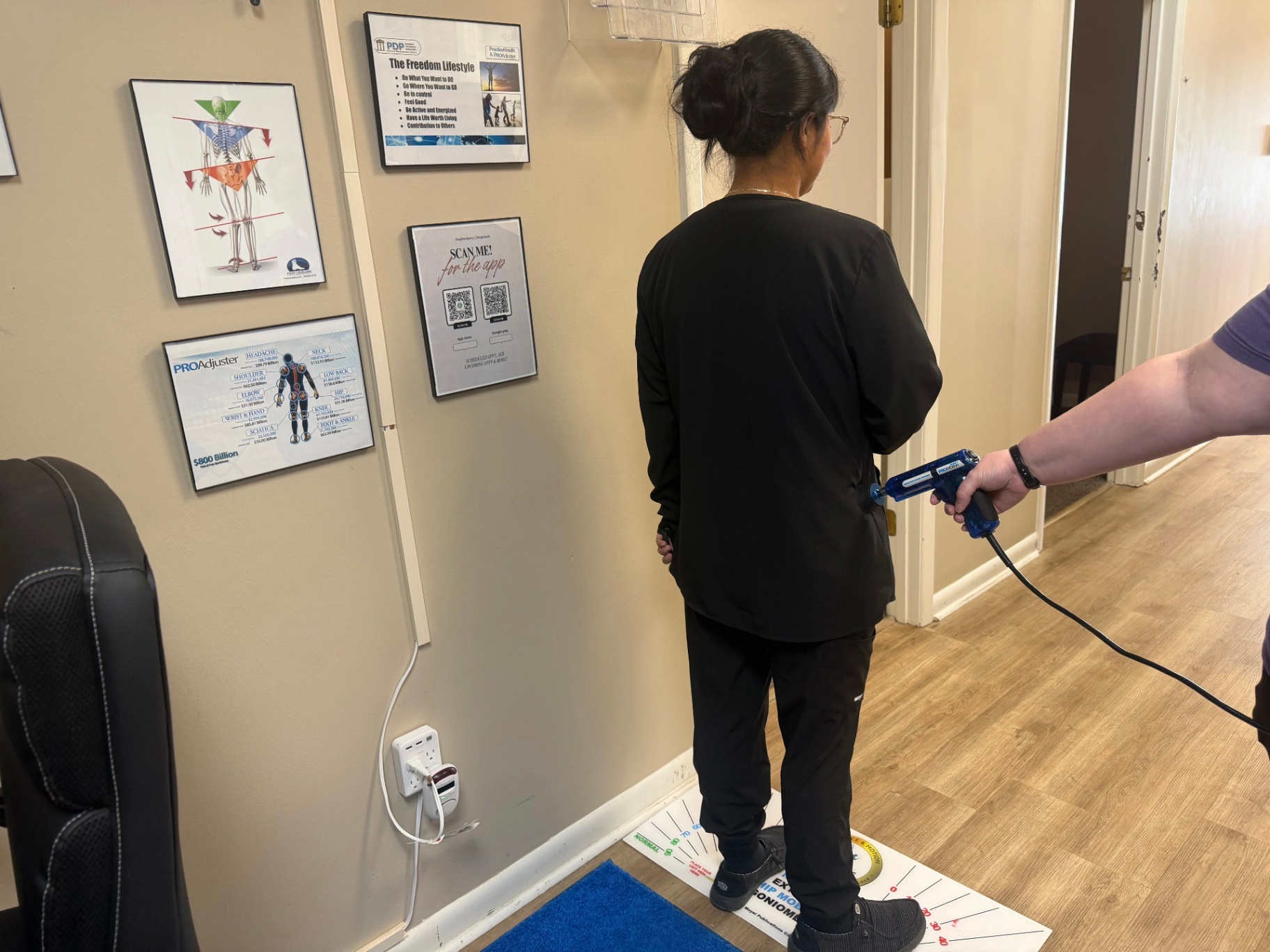
While Dr. Faulkenberry applies a precisely controlled amount of tension and force to the target tissue with the ProMotion instrument, you actively move the joint through guided ranges of motion. Treating tissue while it moves helps address restrictions that only show up during real-world movement — the reaching, turning, bending, and stepping that static treatment can miss.
MMT also plays a key role in our balance and fall-prevention program: specialized MMT protocols stimulate the soft tissues and neural pathways involved in proprioception — your body's position sense — supporting better balance and coordination.
What MMT Is Used For
Stubborn Soft-Tissue Restrictions
Chronic tightness, scar tissue, and adhesions in muscles and fascia that limit motion.
Joint Mobility
Shoulders, hips, knees, and ankles that have lost comfortable range of motion after injury or years of wear.
Balance & Coordination
Used with ProBalance 360 assessments to retrain proprioceptive pathways and reduce fall risk.
Active Recovery
Athletes and active adults who want treatment that translates directly into how they move.
What an MMT Session Feels Like
Sessions are active and interactive. Dr. Faulkenberry positions the instrument on the treatment area and coaches you through specific movements while the instrument works — you might press, lift, rotate, or step on cue. Most patients describe the sensation as a firm, rapid tapping combined with a productive stretch. Sessions typically last about 10–20 minutes depending on the areas treated, and because you take an active role, many patients feel an immediate difference in how the area moves.
MMT FAQs
The information on this page is for general educational purposes and is not medical advice. Individual results vary. Please consult Dr. Faulkenberry to determine whether Mechanical Motion Therapy is appropriate for your condition.
Take the first step toward natural, lasting pain relief.
Talk with Dr. Faulkenberry about your symptoms and see if our non-surgical, root-cause approach is right for you.