
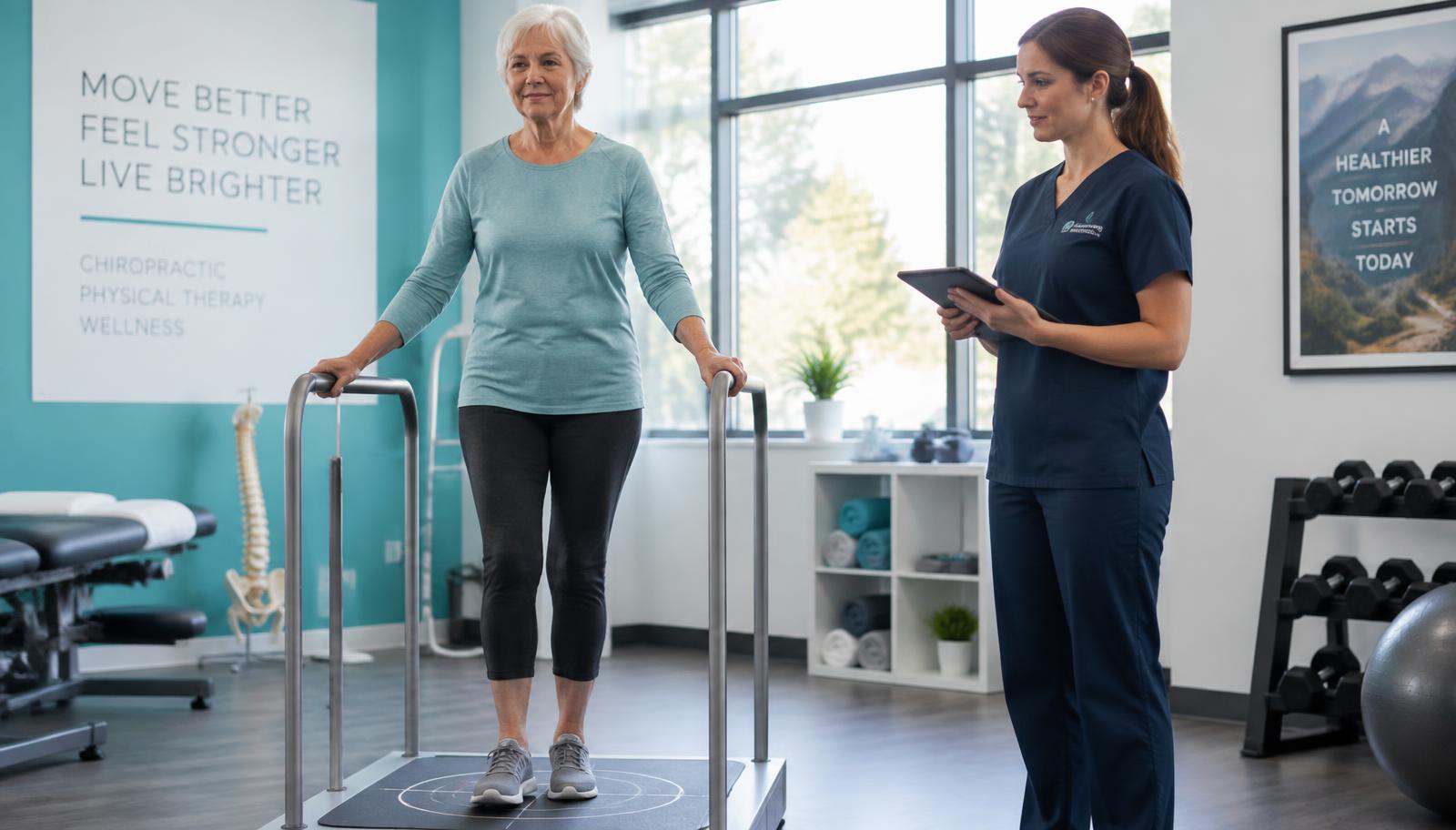
Are You at Risk for a Fall? Why Balance Testing Matters After 60
Are You at Risk for a Fall? Why Balance Testing Matters After 60
Most people do not notice their balance changing. It happens quietly — a hand on the wall in a dark hallway, a slower turn on the stairs, a wobble stepping off a curb. By the time a fall happens, the warning signs have usually been there for years. That is why balance testing for seniors is one of the most useful things you can do after 60. At Faulkenberry Chiropractic in Little Rock, measuring stability tells us what is actually happening, instead of guessing.
Falls Are Common — And Largely Preventable
Falls are the leading cause of injury among older adults, and the Centers for Disease Control and Prevention notes that many of the underlying risk factors can be identified and addressed. The important word is identified. You cannot improve what has never been measured, and balance is not something you can accurately judge about yourself.
Why Balance Declines With Age
Staying upright is a team effort. Your inner ear, your vision, and the position sensors in your feet, ankles, and spine all feed information to your brain, which adjusts your muscles constantly. Any weak link in that chain shows up as unsteadiness. The National Institute on Deafness and Other Communication Disorders explains how balance disorders can cause dizziness and instability, while nerve changes, joint stiffness, reduced strength, and certain medications add to the load.
Signs Your Balance Deserves a Closer Look
- You reach for walls, furniture, or railings without thinking about it
- Turning your head or looking up makes you feel briefly unsteady
- Walking on grass, gravel, or uneven ground feels risky
- You have had a near-fall, a stumble, or a fall in the past year
- Standing on one foot to put on pants or shoes is difficult
- You feel numbness or tingling in your feet
What Balance Testing Actually Measures
A proper assessment looks at how well you control your center of gravity, how much you sway with your eyes open versus closed, how evenly you load each leg, and how quickly you recover when your stability is challenged. MedlinePlus describes the range of causes behind balance problems, which is exactly why objective testing is valuable — it points toward the system that needs work rather than treating everyone the same way.
How We Test and Train Balance
We use ProBalance 360 to measure stability objectively and then retrain it with progressive, guided challenges. Because unsteadiness often has a driver, we also look at what is feeding it: nerve symptoms in the feet may call for nerve plate neuropathy therapy, while joint pain that changes how you walk — especially knee pain — gets addressed alongside the balance work. Testing gives us a number to improve, and repeat testing shows whether it is working.
Things You Can Do at Home This Week
Practice standing near a counter with your feet close together for 30 seconds. Stand up from a chair without using your hands, several times a day. Clear cords and loose rugs from walking paths, and add a night light between the bedroom and bathroom. Wear supportive shoes indoors rather than socks or worn slippers. And keep walking — strength and stability are use-it-or-lose-it systems.
Get a Baseline Before You Need One
The goal is not to react to a fall. It is to know your numbers now, while there is plenty of room to improve them. Dr. Melissa Faulkenberry and our team provide drug-free, non-surgical balance and mobility care in Little Rock. Contact our office to schedule a balance evaluation and find out exactly where you stand.
This article is for general education and is not medical advice. Sudden dizziness, vertigo, fainting, or a recent fall with injury should be evaluated by a healthcare provider promptly.
Take the first step toward natural, lasting pain relief.
Talk with Dr. Faulkenberry about your symptoms and see if our non-surgical, root-cause approach is right for you.