
The Epley Maneuver: Vertigo Treatment for BPPV
If the room spins when you roll over in bed, look up, or bend down, you may have BPPV — the most common cause of vertigo. The fix isn't a pill. It's a precise, guideline-recommended repositioning procedure performed right here in our office, often resolving symptoms in just one or two visits.
What Is BPPV — and Why Does It Make the Room Spin?
Benign paroxysmal positional vertigo (BPPV) happens when tiny calcium carbonate crystals in your inner ear — which normally help you sense gravity — break loose and drift into one of the ear's semicircular canals. When you change head position, the loose crystals swirl through the canal fluid and send your brain a false signal that you're spinning.
The hallmark: brief, intense spinning triggered by specific movements — rolling over in bed, lying back, sitting up, tipping your head back — usually lasting under a minute, then settling until the next trigger.
How the Epley Maneuver Works
The Epley maneuver is a canalith repositioning procedure: a specific sequence of head and body positions, each held briefly, that uses gravity to guide the loose crystals out of the semicircular canal and back into the chamber where they belong — where they stop causing false spinning signals.
This isn't an alternative remedy. Canalith repositioning is the first-line treatment recommended by the American Academy of Otolaryngology–Head and Neck Surgery's clinical practice guideline for BPPV, which specifically advises treating with a repositioning procedure rather than relying on vestibular suppressant medications. Many patients experience improvement or resolution after a single treatment; some need a second or third session.
Your Visit, Step by Step
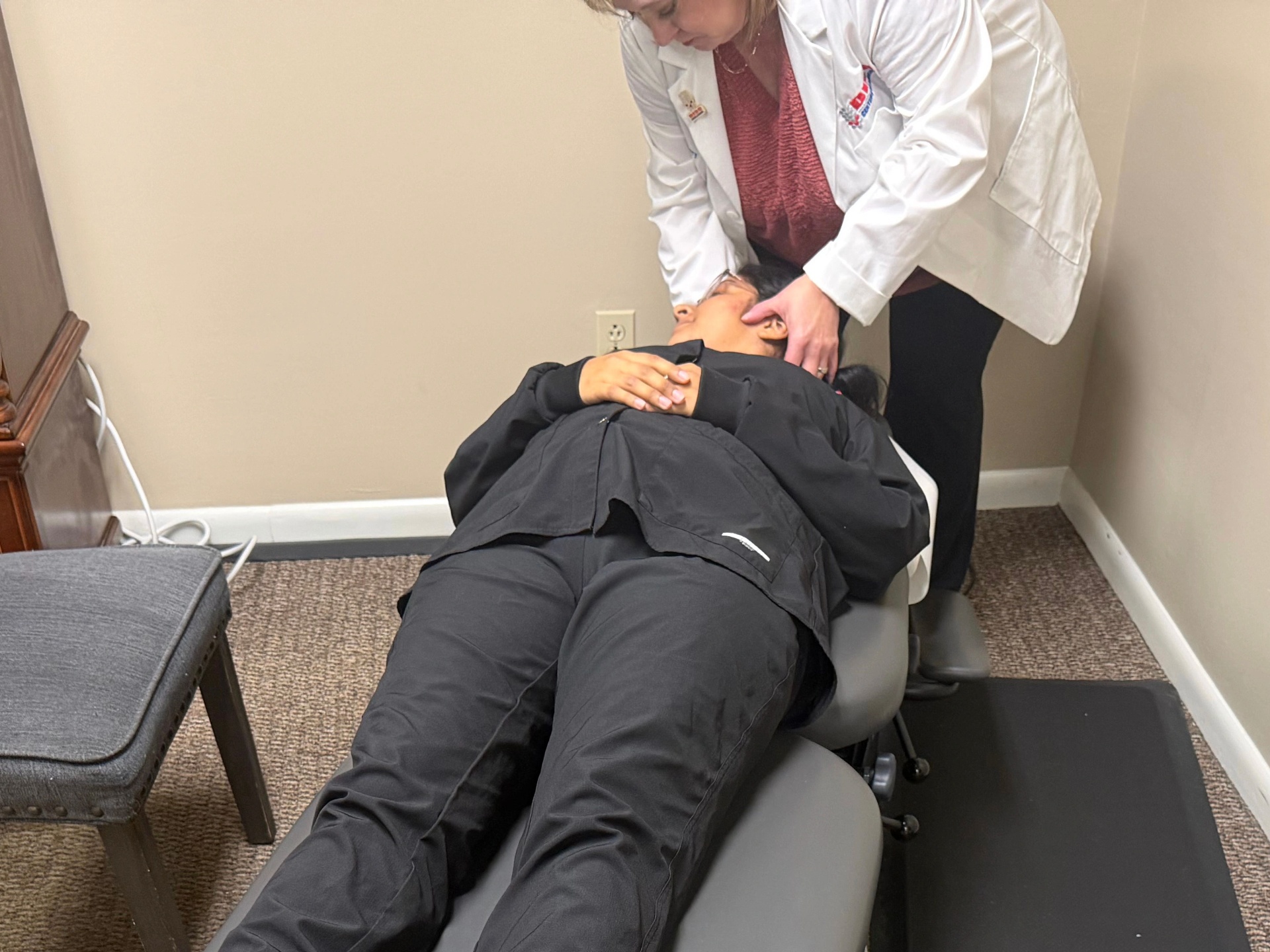
Testing First
We begin with positional testing (such as the Dix-Hallpike test) to confirm BPPV and identify which ear and canal are involved. Treating without testing is guessing.
The Maneuver
Dr. Faulkenberry guides you through the position sequence on the treatment table. Expect brief dizziness during the procedure — that's the crystals moving, and it passes quickly.
Aftercare & Recheck
You'll get simple post-visit guidance, and we recheck to confirm the vertigo is resolved. If symptoms persist or the pattern suggests something other than BPPV, we'll tell you honestly and point you to the right specialist.
Is Your Dizziness Actually BPPV?
BPPV has a distinct signature: short spinning spells triggered by position changes. Dizziness that is constant, accompanied by hearing loss, severe headache, fainting, chest pain, weakness, slurred speech, or vision loss is a different problem — some forms need urgent medical evaluation. Part of our job is telling the difference. If your symptoms don't fit BPPV, we'll say so and help you get to the right provider.
Vertigo & Epley FAQs
The information on this page is for general educational purposes and is not medical advice. Individual results vary. Please consult Dr. Faulkenberry to determine whether the Epley maneuver is appropriate for your condition.
Take the first step toward natural, lasting pain relief.
Talk with Dr. Faulkenberry about your symptoms and see if our non-surgical, root-cause approach is right for you.