
Electrical Stimulation Therapy
A time-tested, comfortable therapy that uses gentle electrical currents to relax muscle spasms, ease pain, and support your body's recovery — often as the perfect warm-up or wind-down to your adjustment.
What Is Electrical Stimulation?
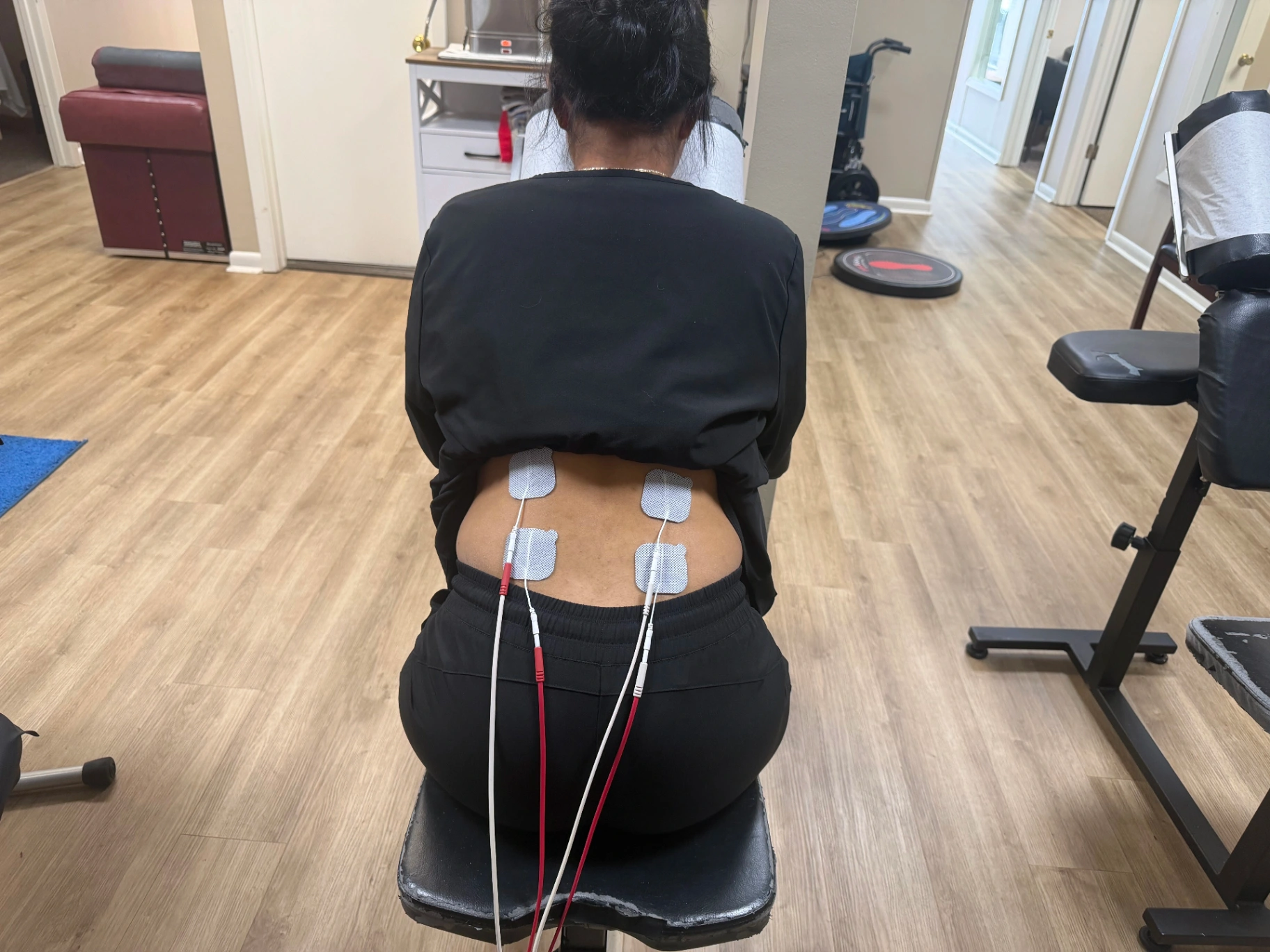
Electrical stimulation ("stim" or "e-stim") delivers mild electrical pulses through pads placed on the skin over the treatment area. Depending on the settings, those pulses can interrupt pain signals traveling to the brain, trigger rhythmic muscle contractions that relax spasm and reduce guarding, promote local circulation, and encourage the release of your body's own natural pain-relieving chemicals.
It's one of the most widely used therapies in chiropractic and physical rehabilitation — familiar, comfortable, and effective as a supporting player in a larger care plan.
How Stim Fits Into Your Care
Before Your Adjustment
Relaxing tight, guarded muscles so your adjustment is more comfortable and more effective.
Acute Injury Care
Calming spasm and pain in the early phase of auto injuries, work injuries, and flare-ups.
Chronic Tension
Recurring muscle tightness in the neck, shoulders, and low back.
Alongside Other Therapies
Frequently paired with ultrasound, massage therapy, or laser in the same visit.
What It Feels Like
You'll feel a gentle tingling or a rhythmic pulsing — most patients find it genuinely relaxing, and intensity is always set to your comfort. Sessions typically run 10–20 minutes. Stim is not used for patients with pacemakers or implanted electronic devices, over the abdomen during pregnancy, or over areas of infection or blood clots; we screen your history first.
E-Stim FAQs
The information on this page is for general educational purposes and is not medical advice. Individual results vary. Please consult Dr. Faulkenberry to determine whether electrical stimulation therapy is appropriate for your condition.
Take the first step toward natural, lasting pain relief.
Talk with Dr. Faulkenberry about your symptoms and see if our non-surgical, root-cause approach is right for you.