
Is Spinal Decompression Right for You? Signs Your Spine Needs Relief
Is Spinal Decompression Right for You? Signs Your Spine Needs Relief
Back pain is one of the most common health complaints in the world. Millions of people experience daily discomfort caused by spinal pressure, poor posture, disc problems, injuries, or chronic wear and tear. For some, the pain is mild and manageable. For others, it affects work, sleep, exercise, mobility, and overall quality of life.
Many people rely on pain medications, temporary stretching routines, or simply “living with it.” However, persistent spinal discomfort often indicates an underlying issue that requires proper treatment.
One increasingly popular non-surgical treatment option is spinal decompression therapy.
Spinal decompression is designed to relieve pressure on the spine, reduce disc-related pain, improve mobility, and support the body’s natural healing process. But how do you know if spinal decompression is right for you?
Understanding the signs your spine needs relief can help you determine whether this treatment may benefit your condition.
At Faulkenberry Chiropractic, patients receive individualized evaluations and non-invasive chiropractic solutions designed to address the root cause of pain—not just the symptoms.
Understanding the Spine and Why It Matters
The spine is one of the most important structures in the human body.
It serves several major functions:
-
Supports body weight
-
Protects the spinal cord and nervous system
-
Allows movement and flexibility
-
Helps maintain posture and balance
-
Absorbs shock during movement
-
Enables communication between the brain and body
The spine is made up of vertebrae separated by soft spinal discs. These discs act like cushions that absorb impact and allow smooth movement.
Over time, spinal discs can become compressed, dehydrated, inflamed, or damaged. When this happens, pressure may build within the spine and surrounding nerves.
This pressure can lead to:
-
Chronic back pain
-
Neck pain
-
Sciatica
-
Tingling sensations
-
Numbness
-
Muscle weakness
-
Reduced mobility
-
Stiffness
-
Poor posture
-
Headaches
Spinal decompression therapy aims to gently reduce this pressure and create an environment where healing can occur naturally.
What Is Spinal Decompression Therapy?
Spinal decompression therapy is a non-surgical treatment designed to gently stretch the spine.
This controlled stretching helps relieve pressure on compressed spinal discs and nerves.
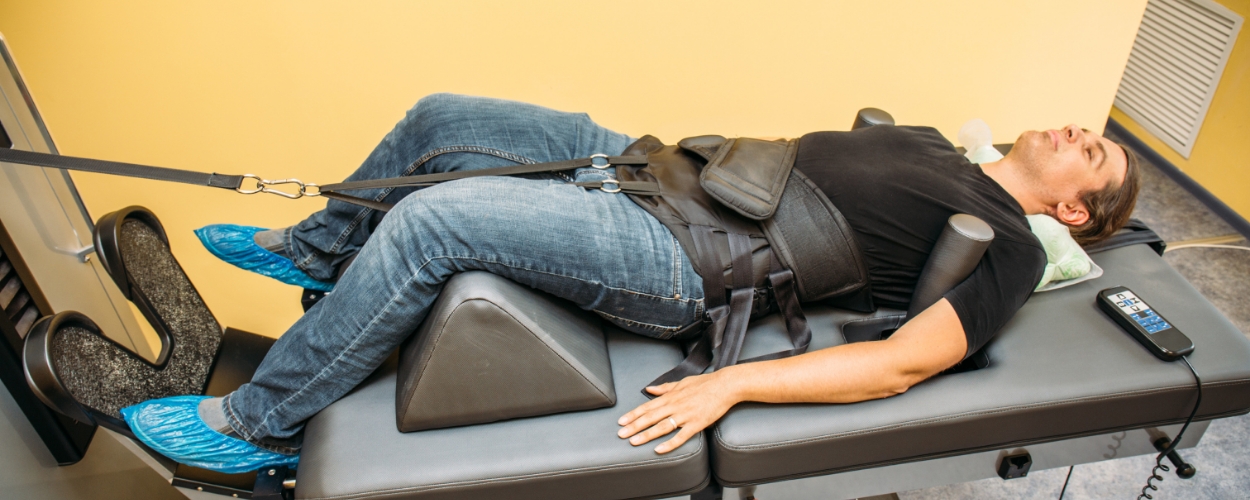
The therapy is typically performed using a specialized decompression table. During treatment:
-
The patient lies comfortably on the table
-
The spine is gently stretched in a controlled manner
-
Pressure inside the discs is reduced
-
Nutrient-rich fluids may flow back into the discs
-
Tension on nerves decreases
-
The body’s healing response is encouraged
Unlike aggressive spinal manipulation, decompression therapy is generally gentle and relaxing.
Many patients report:
-
Reduced pain
-
Improved flexibility
-
Less stiffness
-
Better mobility
-
Reduced nerve symptoms
-
Improved comfort during daily activities
Spinal decompression is commonly used alongside other chiropractic and rehabilitative therapies for comprehensive spinal care.
How Spinal Compression Happens
Spinal compression develops gradually in many cases.
Daily stress, repetitive movements, poor posture, and aging all place pressure on the spine.
Some of the most common causes include:
1. Poor Posture
Sitting for long periods with poor posture places uneven pressure on spinal discs.
This is especially common among:
-
Office workers
-
Drivers
-
Students
-
Remote workers
-
Gamers
-
Individuals using phones or tablets frequently
Forward head posture and slouched sitting can increase stress on the neck and lower back.
2. Herniated or Bulging Discs
Spinal discs can weaken over time.
When the disc material pushes outward, it may irritate nearby nerves and cause pain.
3. Degenerative Disc Disease
As people age, spinal discs naturally lose hydration and elasticity.
This can reduce cushioning between vertebrae and increase spinal compression.
4. Repetitive Motion Injuries
Repeated bending, lifting, twisting, or physical labor can gradually strain the spine.
5. Sports Injuries
Athletes place significant demands on the spine.
High-impact activities may increase the risk of compression and disc injuries.
6. Sedentary Lifestyle
Lack of movement weakens spinal support muscles and contributes to stiffness and pressure buildup.
7. Excess Body Weight
Additional body weight increases mechanical stress on spinal joints and discs.
8. Auto Accidents and Trauma
Whiplash and impact injuries may compress spinal structures and damage soft tissues.
Signs Your Spine Needs Relief
Many people ignore spinal symptoms until the pain becomes severe.
However, the body often provides warning signs before conditions worsen.
Recognizing these symptoms early may help prevent long-term complications.
1. Persistent Back Pain
Ongoing back pain is one of the most obvious signs your spine may need decompression.
Pain may occur in:
-
The lower back
-
Mid-back
-
Upper back
-
Neck region
The discomfort may feel:
-
Sharp
-
Aching
-
Burning
-
Throbbing
-
Tight
-
Constant or intermittent
Pain lasting several weeks or recurring frequently should not be ignored.
2. Pain That Radiates Into the Arms or Legs
Radiating pain often suggests nerve involvement.
Compressed nerves in the spine can send pain signals into:
-
Shoulders
-
Arms
-
Hands
-
Hips
-
Buttocks
-
Legs
-
Feet
Sciatica is one of the most common examples.
It occurs when the sciatic nerve becomes irritated, often causing shooting pain from the lower back down the leg.
3. Numbness or Tingling
Pins-and-needles sensations may indicate nerve compression.
Symptoms may appear in:
-
Fingers
-
Hands
-
Toes
-
Feet
-
Legs
-
Arms
These sensations may worsen after sitting, standing, or certain movements.
4. Limited Mobility
If bending, twisting, or standing becomes difficult, spinal compression may be contributing to stiffness.
Common signs include:
-
Difficulty getting out of bed
-
Reduced flexibility
-
Pain when turning the neck
-
Trouble bending forward
-
Feeling “locked up” after sitting
5. Frequent Muscle Tightness or Spasms
Spinal problems can cause surrounding muscles to overwork in an attempt to stabilize the body.
This may lead to:
-
Tight muscles
-
Muscle fatigue
-
Cramping
-
Spasms
-
Trigger points
6. Pain That Worsens After Sitting
Prolonged sitting increases spinal pressure.
If your pain worsens after:
-
Office work
-
Long drives
-
Watching TV
-
Computer use
there may be compression affecting the spine.
7. Headaches Associated With Neck Tension
Neck compression and poor spinal alignment may contribute to tension headaches and cervicogenic headaches.
Symptoms may include:
-
Pain at the base of the skull
-
Tight neck muscles
-
Reduced neck movement
-
Headaches after screen time
8. Pain That Improves When Lying Down
Some spinal conditions feel better when pressure is temporarily removed.
Relief while lying down may indicate compression-related issues.
9. Chronic Postural Problems
Poor posture often reflects deeper spinal dysfunction.
Signs include:
-
Rounded shoulders
-
Forward head posture
-
Uneven hips
-
Leaning to one side
-
Difficulty standing upright
10. Reduced Physical Performance
Spinal dysfunction may affect:
-
Athletic performance
-
Strength
-
Endurance
-
Balance
-
Coordination
-
Recovery time
If physical activities become increasingly uncomfortable, spinal stress may be a contributing factor.
Conditions Commonly Treated With Spinal Decompression
Spinal decompression may help patients suffering from a variety of conditions.
Herniated Discs
Herniated discs occur when the inner portion of a disc pushes outward.
This may compress nerves and cause:
-
Back pain
-
Leg pain
-
Numbness
-
Weakness
Decompression may help reduce disc pressure and improve symptoms.
Bulging Discs
Bulging discs may develop gradually from wear and tear.
Reducing spinal pressure may help improve comfort and mobility.
Degenerative Disc Disease
As discs lose hydration over time, movement may become painful.
Spinal decompression may help improve disc nutrition and reduce stress.
Sciatica
Sciatica commonly causes:
-
Shooting leg pain
-
Tingling
-
Numbness
-
Burning sensations
Reducing nerve compression may ease symptoms.
Spinal Stenosis
Spinal stenosis involves narrowing of spinal spaces.
This may place pressure on nerves and contribute to pain and mobility issues.
Facet Joint Syndrome
Inflamed spinal joints can create stiffness and chronic discomfort.
Chronic Neck Pain
Cervical decompression may help reduce tension and nerve irritation in the neck.
Chronic Lower Back Pain
Many chronic lower back conditions involve pressure and disc dysfunction.
Decompression therapy may provide non-surgical relief.
Who May Benefit From Spinal Decompression?
Spinal decompression may be appropriate for individuals who:
-
Have chronic back or neck pain
-
Experience disc-related symptoms
-
Want non-surgical treatment options
-
Prefer drug-free pain management
-
Have recurring nerve pain
-
Sit for long hours daily
-
Perform repetitive physical work
-
Experience sciatica symptoms
-
Have mobility limitations
-
Want to improve spinal function naturally
Patients often seek spinal decompression after trying:
-
Pain medications
-
Massage therapy
-
Exercise programs
-
Rest
-
Injections
-
Physical therapy
without lasting results.
Who May Not Be a Candidate for Spinal Decompression?
Although spinal decompression is safe for many patients, it may not be suitable for everyone.
Certain conditions may require alternative treatment approaches.
These may include:
-
Severe osteoporosis
-
Spinal fractures
-
Advanced instability
-
Certain spinal implants
-
Pregnancy
-
Spinal tumors
-
Severe nerve damage
-
Certain surgical complications
A proper examination is essential before beginning treatment.
What Happens During a Spinal Decompression Session?
Many patients feel nervous before their first treatment because they are unfamiliar with the process.
Fortunately, spinal decompression therapy is generally comfortable and non-invasive.
A typical session may include:
Initial Evaluation
The chiropractor reviews:
-
Medical history
-
Symptoms
-
Posture
-
Range of motion
-
Neurological function
-
Imaging results if available
This helps determine whether decompression is appropriate.
Treatment Setup
The patient lies on a specialized decompression table.
Harnesses or supports may be used to stabilize the body.
Controlled Decompression Cycles
The table gently stretches and relaxes the spine in cycles.
These movements are carefully controlled based on the patient’s condition.
Session Duration
Most sessions last between 15 and 30 minutes.
Post-Treatment Recommendations
Patients may receive guidance regarding:
-
Stretching
-
Hydration
-
Posture
-
Ergonomics
-
Exercise
-
Activity modification
Is Spinal Decompression Painful?
Most patients describe spinal decompression as:
-
Gentle
-
Relaxing
-
Comfortable
-
Soothing
Many people even fall asleep during treatment.
Some patients may experience mild soreness initially as the body adapts to changes in spinal pressure.
However, treatment is generally far less aggressive than surgical procedures or invasive interventions.
Benefits of Spinal Decompression Therapy
Spinal decompression offers several potential benefits.
1. Non-Surgical Treatment
One of the biggest advantages is avoiding surgery whenever possible.
Many patients seek conservative options before considering invasive procedures.
2. Drug-Free Pain Relief
Decompression focuses on mechanical correction rather than masking symptoms with medication.
3. Reduced Pressure on Nerves
Relieving nerve compression may improve:
-
Pain
-
Tingling
-
Numbness
-
Weakness
4. Improved Disc Health
Reduced spinal pressure may support nutrient exchange within spinal discs.
5. Better Mobility
Patients often experience improved flexibility and movement.
6. Improved Posture
Reducing spinal stress may help improve alignment and posture.
7. Enhanced Daily Function
Simple activities such as walking, sitting, exercising, and sleeping may become easier.
8. Customized Care
Treatment plans can be tailored to the patient’s specific condition and goals.
Lifestyle Habits That May Be Damaging Your Spine
Many daily habits quietly contribute to spinal compression.
Poor Desk Ergonomics
Improper workstation setup can strain the neck and lower back.
Excessive Screen Time
Forward head posture significantly increases stress on cervical structures.
Lack of Movement
Long periods of inactivity reduce spinal mobility.
Heavy Lifting With Poor Form
Improper lifting techniques increase disc pressure.
Sleeping on Unsupportive Mattresses
Poor sleep posture may aggravate spinal dysfunction.
Weak Core Muscles
Core muscles help stabilize the spine.
Weakness may contribute to chronic pain and instability.
Exercises and Habits That Support Spinal Health
While spinal decompression may help relieve pressure, long-term spinal health also depends on lifestyle habits.
Stay Physically Active
Movement helps:
-
Improve circulation
-
Maintain flexibility
-
Support disc nutrition
-
Reduce stiffness
Practice Proper Posture
Keep:
-
Ears aligned over shoulders
-
Shoulders relaxed
-
Feet flat when sitting
-
Computer screens at eye level
Strengthen the Core
Core stability supports spinal alignment.
Stretch Regularly
Stretching may reduce tension in:
-
Hamstrings
-
Hip flexors
-
Lower back muscles
-
Chest muscles
Maintain Healthy Body Weight
Reducing excess weight lowers spinal stress.
Hydrate Properly
Spinal discs require hydration for optimal function.
Avoid Smoking
Smoking reduces circulation and may accelerate disc degeneration.
Frequently Asked Questions (FAQs)
1. How long does spinal decompression therapy take?
Most sessions last between 15 and 30 minutes, depending on the treatment plan.
2. How many sessions will I need?
The number of sessions varies based on the severity of the condition, symptoms, and patient response.
Some patients notice improvement quickly, while others require longer treatment plans.
3. Is spinal decompression safe?
For properly selected patients, spinal decompression is generally considered safe and non-invasive.
A professional evaluation is important before beginning treatment.
4. Can spinal decompression help sciatica?
Yes. Many patients with sciatica seek decompression therapy to reduce pressure on irritated nerves.
5. Will I need surgery if decompression does not work?
Not necessarily.
Many conservative options exist, and treatment plans vary depending on the condition.
6. Can spinal decompression help neck pain?
Yes. Cervical decompression may help reduce neck pressure and nerve irritation.
7. Does spinal decompression hurt?
Most patients describe the therapy as gentle and relaxing.
8. Is spinal decompression covered by insurance?
Coverage varies depending on the provider and plan.
Patients should verify benefits directly with their insurance company.
9. Can I exercise during treatment?
Many patients can continue light activity and exercise, although modifications may be recommended.
10. How do I know if I am a candidate?
The best way to determine candidacy is through a professional spinal evaluation.
Conclusion
Your spine plays a critical role in nearly every movement your body performs.
When spinal discs, joints, muscles, and nerves become compressed or irritated, the effects may extend far beyond simple back pain.
Persistent discomfort, stiffness, nerve symptoms, reduced mobility, headaches, and postural problems are all signs your spine may need relief.
Spinal decompression therapy offers a non-surgical, drug-free approach designed to reduce spinal pressure and support natural healing.
For many patients, it can become an important part of a comprehensive chiropractic care plan focused on restoring comfort, mobility, and long-term spinal function.
If you have been struggling with chronic neck pain, lower back pain, disc issues, sciatica, or mobility limitations, a professional evaluation can help determine whether spinal decompression is right for you.
Taking action early may help prevent long-term complications and improve your overall quality of life.
If you are experiencing persistent back pain, neck pain, sciatica, disc-related symptoms, or reduced mobility, professional chiropractic care may help.
Faulkenberry Chiropractic provides personalized care focused on helping patients improve spinal health, mobility, comfort, and overall wellness.
📍 Faulkenberry Chiropractic — Contact Details
Address: 11125 Arcade Dr, STE D, Little Rock, AR 72212
Phone: (501) 225-1371
Email: faulkenberrychiro@gmail.com
Website: www.faulkenberrychiropractic.com
Take the first step toward natural, lasting pain relief.
Talk with Dr. Faulkenberry about your symptoms and see if our non-surgical, root-cause approach is right for you.