
Back and neck pain affect millions of people worldwide, often caused by compressed spinal discs, poor posture, or degenerative conditions. For many, the pain can become chronic, interfering with work, sleep, and daily activities. While medications and surgery are common treatments, many people seek natural, non-invasive alternatives to relieve disc pressure and restore spinal health.
One of the most effective conservative treatments available today is spinal decompression therapy. This gentle chiropractic technique helps relieve pressure on the spinal discs, promotes natural healing, and improves mobility—without surgery or drugs.
In this comprehensive guide, we’ll explore what spinal decompression is, how it works, its benefits, conditions it treats, patient success stories, scientific research, exercises, lifestyle strategies, and everything you need to know before considering this therapy.
To understand why spinal decompression works, it’s important to know how the spine functions.
Your spine is composed of 33 vertebrae arranged in a column. Between each vertebra sits a spinal disc, which acts as a cushion or shock absorber. Each disc contains a gel-like center called the nucleus pulposus surrounded by a tough outer layer known as the annulus fibrosus. These discs allow flexibility, absorb shock from movement, and protect the vertebrae from friction.
Over time, various factors can increase pressure on these discs, including:
Poor posture – Slouching while sitting or standing increases stress on the lower back and neck.
Heavy lifting – Lifting incorrectly can compress spinal discs.
Aging and disc degeneration – Discs lose hydration and elasticity as we age.
Sedentary lifestyle – Lack of movement reduces nutrient flow to the discs.
Repetitive strain – Activities like typing, driving, or bending can wear discs.
Injuries or accidents – Falls or trauma can compress discs suddenly.
When discs become compressed, they may bulge or herniate, pressing on nearby nerves. This compression can cause symptoms such as:
Chronic lower back or neck pain
Sciatica (pain radiating down the leg)
Numbness or tingling in the extremities
Weakness in arms or legs
Reduced mobility and stiffness
Spinal decompression therapy targets these issues by reducing pressure within the discs, promoting circulation, and allowing natural healing.
Understanding the anatomy of the spine helps clarify why decompression works so well. The spine is divided into several regions:
Cervical Spine (Neck): 7 vertebrae supporting the head. Compression here may cause neck pain, headaches, or tingling in the arms.
Thoracic Spine (Upper & Mid Back): 12 vertebrae connecting to ribs. Compression often leads to mid-back pain or stiffness.
Lumbar Spine (Lower Back): 5 vertebrae bearing most body weight. Disc compression here is a common cause of lower back pain and sciatica.
Sacrum and Coccyx (Base of Spine): Fused vertebrae forming the tailbone and pelvic structure. Pain here is usually due to injury rather than disc degeneration.
Each vertebra and disc is supported by muscles, ligaments, and nerves. When discs are compressed, nerve pathways can become irritated, sending pain signals to other parts of the body. By relieving disc pressure, spinal decompression allows nerves to function optimally and reduces pain signals.
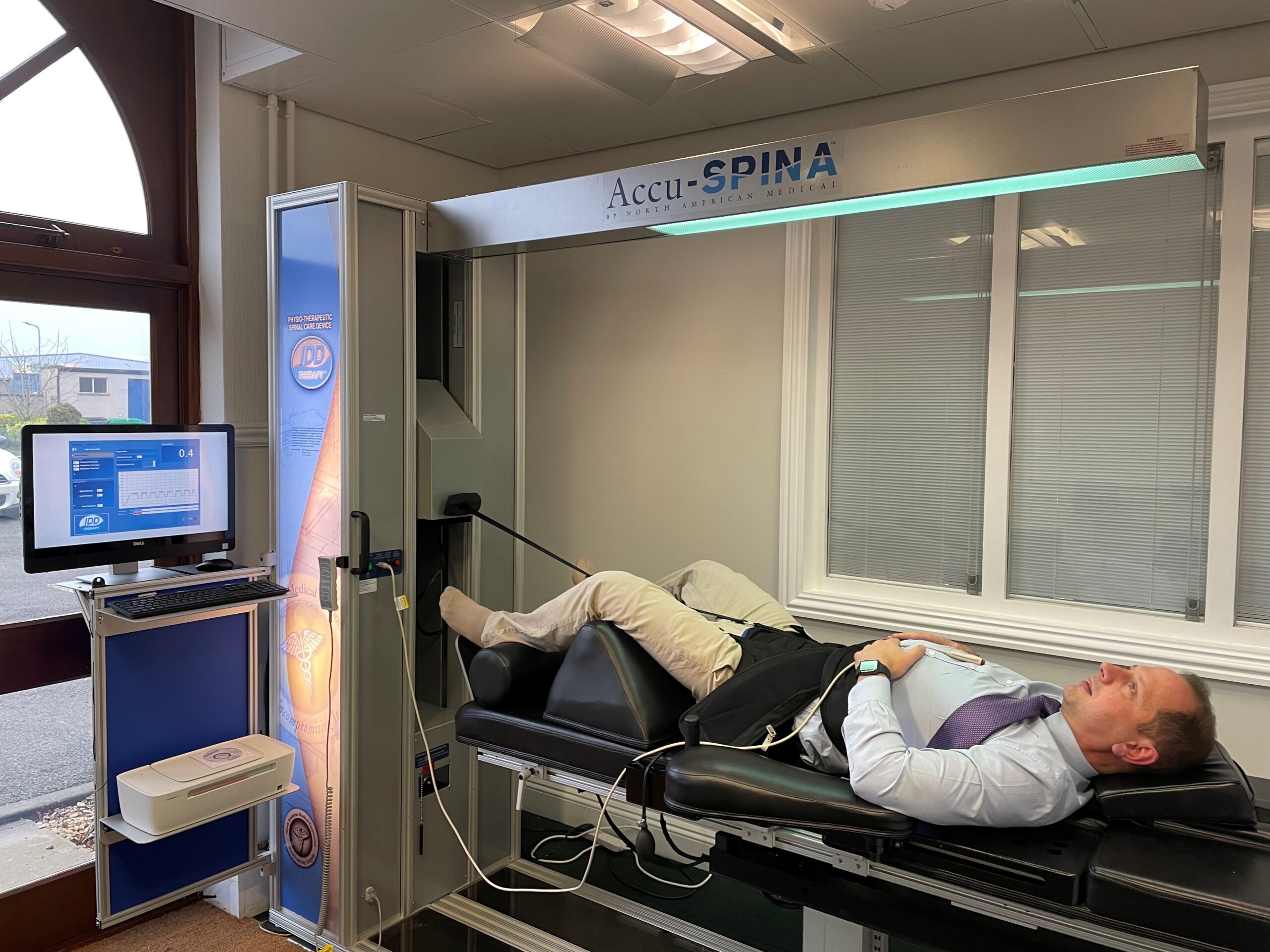
Spinal decompression therapy is a non-surgical chiropractic treatment designed to gently stretch the spine using a specialized table or traction system.
During treatment, the spine is carefully stretched in controlled cycles of pulling and relaxing. This process creates negative pressure inside the spinal discs, which allows bulging or herniated disc material to retract and reduces pressure on surrounding nerves.
This decompression effect also helps pull oxygen, water, and nutrients into the discs, supporting healing and improving disc health. The therapy is safe, gentle, and typically performed in a chiropractic clinic.
Spinal decompression therapy relieves disc pressure by gently stretching the spine, creating negative pressure within the discs. This process draws bulging material back into place, reduces nerve compression, improves circulation, restores hydration, and stimulates nutrient flow. It also relaxes surrounding muscles, promoting healing, reducing inflammation, and enhancing spinal mobility naturally.
The controlled stretching of the spine creates a vacuum-like effect inside the discs. This negative pressure helps draw bulging disc material back into place and relieves nerve compression.
Healthy discs require proper hydration to maintain flexibility and shock absorption. Decompression therapy encourages the movement of nutrients, oxygen, and fluids into the discs, promoting repair and regeneration.
By reducing pressure and improving spinal alignment, decompression increases blood flow to the surrounding tissues, accelerating healing and reducing inflammation.
When discs compress nerves, it can cause radiating pain or numbness. Decompression creates space between vertebrae, reducing nerve irritation and improving nerve function.
Gentle stretching during decompression also relaxes surrounding muscles, reducing muscle spasms that contribute to back pain.
Spinal decompression therapy can help treat several spinal conditions, especially those related to disc compression. Common conditions include:
Herniated or bulging discs
Degenerative disc disease
Sciatica
Pinched nerves
Spinal stenosis
Chronic lower back pain
Chronic neck pain
Facet joint syndrome
Decompression therapy addresses the root cause of these conditions—pressure on the spinal discs—rather than just masking symptoms.
Spinal decompression reduces nerve and disc pressure, offering natural pain relief without relying on medications. Patients often report a noticeable reduction in back, neck, or leg pain within a few sessions.
For patients considering surgery, decompression is a safe, non-invasive option. Most patients return to daily activities immediately after treatment.
Reduced pressure and inflammation allow patients to move more freely. This improvement can enhance the ability to bend, twist, and lift comfortably.
Decompression promotes nutrient and oxygen flow into discs, encouraging natural repair and regeneration.
By alleviating nerve compression, spinal decompression reduces localized inflammation, which is a major contributor to chronic pain.
Decompression can restore proper vertebral spacing and spinal alignment, helping reduce muscle strain and postural imbalances.
Unlike temporary solutions, decompression addresses the underlying causes of spinal pain, helping prevent recurrence.
For lasting spinal health, spinal decompression therapy is most effective when combined with proper posture, regular exercise, core strengthening, and healthy lifestyle habits.
Maintain a neutral spine while sitting or standing to minimize disc stress; using ergonomic chairs and standing desks provides additional support.
A strong core supports the spine, reducing disc pressure and improving balance. Exercises like planks, bridges, and Pilates are excellent choices.
Walking, swimming, and low-impact aerobic exercise improve circulation, maintain flexibility, and reduce stiffness.
Excess weight, especially in the abdomen, increases spinal load and accelerates disc degeneration.
Proper workstation setup and lifting techniques prevent repetitive strain and support spinal health.
Gentle stretching of the hamstrings, hip flexors, and back muscles helps relieve tension and maintain spinal mobility.
Many patients report substantial pain relief, increased mobility, reduced nerve pressure, and overall improved quality of life after spinal decompression therapy, making it an effective, non-surgical solution for chronic back and neck issues.
John, 42: Suffered from chronic lower back pain for 5 years. After 15 sessions, he reported significant pain reduction and improved mobility.
Susan, 36: Experienced sciatica from a herniated disc. Spinal decompression helped retract the disc and relieve nerve pressure, allowing her to resume yoga.
Mark, 50: Wanted to avoid back surgery. After decompression therapy, he experienced pain-free movement and improved posture.
These stories highlight the effectiveness of combining decompression with lifestyle changes and regular chiropractic care.
Research indicates that spinal decompression therapy effectively reduces herniated or bulging discs, alleviates nerve pressure, decreases chronic pain, enhances spinal mobility, restores disc hydration, and supports natural healing, offering a safe, non-surgical solution for long-term spinal health.
Studies show that decompression can reduce herniated disc size and improve symptoms of sciatica.
Clinical trials indicate that patients experience significant pain reduction and functional improvement after decompression therapy.
Decompression therapy is well-tolerated, with minimal side effects, making it an appealing alternative to invasive treatments.
While more large-scale studies are ongoing, current evidence and patient outcomes support spinal decompression as an effective conservative treatment for disc-related conditions.
While professional spinal decompression therapy is crucial for treating disc-related issues, incorporating safe at-home exercises can enhance recovery and support spinal health. Gentle movements like pelvic tilts, cat-cow stretches, child’s pose, knee-to-chest stretches, and core-strengthening exercises improve flexibility, strengthen supportive muscles, reduce tension, and promote long-term spinal stability naturally.
Pelvic Tilt – Lie on your back, bend your knees, and gently tilt your pelvis upward. Helps strengthen lower back muscles.
Cat-Cow Stretch – On hands and knees, alternate arching and rounding your spine to improve flexibility.
Child’s Pose – Stretches lower back and relieves tension.
Knee-to-Chest Stretch – Helps release pressure on lower back discs.
Core Strengthening Planks – Stabilizes the spine and reduces strain.
Always consult your chiropractor before starting new exercises to ensure safety.
Spinal decompression therapy is generally safe but may not be suitable for everyone. Conditions requiring caution include:
Spinal fractures
Severe osteoporosis
Spinal implants
Certain tumors
Pregnancy
Some patients may experience mild soreness or stiffness after treatment, which usually resolves within 24–48 hours.
Most patients require 10–20 sessions, depending on the severity of their condition.
No. Treatments are gentle, and some patients find them relaxing or even fall asleep during sessions.
Each session typically lasts 20–45 minutes.
Some patients notice improvement after a few sessions, while others may need several weeks.
For mild to moderate disc problems, decompression can be an effective non-surgical alternative.
Yes. By restoring alignment and disc health, it can reduce the risk of recurrence.
Coverage varies. Many insurance plans cover decompression as part of chiropractic treatment.
While safe for most adults, individuals with severe spinal degeneration or other health conditions should consult their chiropractor.
Typically, 3–5 times per week initially, then tapered based on progress.
Yes. Decompression can complement physical therapy, massage, and corrective exercises for optimal results.
Spinal decompression therapy is a highly effective, non-surgical approach to relieving disc pressure and improving overall spinal health. By gently stretching the spine in a controlled manner, this therapy creates negative pressure within the discs, allowing bulging or herniated material to retract and relieving pressure on nearby nerves. This process not only reduces pain but also promotes natural healing, restores proper disc hydration, and improves blood circulation, which accelerates tissue repair. Additionally, the gentle stretching relaxes surrounding muscles, alleviating tension and further enhancing spinal function.
For individuals experiencing chronic back or neck pain, herniated discs, sciatica, or nerve compression, spinal decompression offers a safe, drug-free alternative to invasive surgical procedures. When combined with healthy lifestyle habits, regular core-strengthening exercises, ergonomic adjustments, and ongoing chiropractic care, patients often experience significant improvements in mobility, flexibility, and overall quality of life. Over time, this holistic approach supports long-term spinal health, reduces the risk of recurring injuries, and allows individuals to live more active, pain-free lives naturally.
If you’re struggling with chronic back or neck pain, professional chiropractic care can help you find lasting relief.
The experienced team at Faulkenberry Chiropractic specializes in spinal decompression therapy and personalized treatment plans designed to restore spinal health naturally.
Address:
11125 Arcade Dr, STE D
Little Rock, AR 72212
Phone: (501) 225-1371
Email: faulkenberrychiro@gmail.com
Website:
www.faulkenberrychiropractic.com
Schedule your consultation today and take the first step toward a pain-free life!
